
Beyond the Boiler: Your Complete Guide to Dairy & Food Processing Solutions

If you’ve been Googling phrases like:
“Best dairy processing equipment in Kenya”
“Milk pasteurizer suppliers in East Africa” or
“Food processing plant setup cost Kenya,”
you are standing at the intersection of opportunity and engineering reality. You’re not alone.
Kenya’s dairy and food processing sector is experiencing robust expansion, fueled by rising urban demand, opportunities for value addition, export potential and increasingly stringent food safety regulations from bodies like the Kenya Dairy Board (KDB) and Kenya Bureau of Standards (KEBS). In 2025, formal milk intake surpassed 1 billion litres for the first time, marking an 11.5% increase, while national milk production continues to grow steadily toward projections of over 5 billion litres in recent targets, with aspirations for even higher volumes in the coming years. This growth underscores the need for modern, efficient processing infrastructure to handle pasteurized milk, yogurt, cheese, UHT products, juices, edible oils and grain-based foods.
Amid this boom, Plenser Limited has introduced its dedicated Dairy, Food & Industrial Processing Division, building on over 25 years of expertise in industrial engineering. As a Nairobi-based leader in plant engineering—specializing in steam boilers, hot water systems, heat recovery, and related thermal solutions—Plenser is well-positioned to support Kenya’s processors with reliable, compliant, and scalable systems.
To meet this growth profitably and sustainably, industries need more than just machines, they need reliable engineering partners who understand the complex interplay between thermal systems, hygienic design and industrial processing environments.
That is precisely where Plenser Limited steps in with its newly introduced Dairy, Food & Industrial Processing Division.
This complete guide answers the most searched questions about dairy and food processing in Kenya and explains how modern, integrated engineering makes it possible for your business to scale.
Why Is Dairy & Food Processing Booming in Kenya?
Kenya is one of Africa’s leading milk producers, but the real opportunity lies in processing. The demand for pasteurized milk, yogurt, cheese, UHT products, processed juices, edible oils and grain-based foods continues to rise.
However, growth brings scrutiny. Regulatory bodies now require strict compliance with food safety, hygiene and environmental standards. Recent KEBS draft standards (such as G/TBT/N/KEN/1714 for dairy products) highlight the government’s focus on quality assurance and consumer protection.
This means modern facilities must be:
- Energy Efficient: To protect margins against fluctuating fuel costs.
- Hygienically Designed: To meet KEBS and international export standards.
- Environmentally Compliant: To satisfy NEMA (National Environment Management Authority) regulations.
- Scalable: To grow with your production needs.
In this new landscape, engineering is no longer optional, it is strategic.
What Equipment Is Needed to Start a Dairy Processing Plant?
This is the million-shilling question. A fully functional dairy processing plant requires an integrated ecosystem of machinery. Here is a breakdown of the essential components, from reception to packaging.
- Milk Reception & Storage Systems
Raw milk must be handled immediately to prevent spoilage. This requires:
- Milk Reception Tanks: For collecting and weighing incoming milk.
- Chilling Units: Rapid cooling to 4°C is vital to halt bacterial growth.
- Storage Silos: Insulated silos for holding raw or pasteurized milk before further processing.
- Pasteurization Systems
Pasteurization is the heart of dairy safety. It destroys harmful bacteria like Listeria and Salmonella while preserving nutritional value. Systems include:
- Plate Heat Exchangers (PHE): The industry standard for efficient heating and cooling.
- Tubular Pasteurizers: Ideal for products with higher viscosity or particulate matter.
- Flow Diversion Valves: Ensuring any under-heated milk is automatically redirected for reprocessing.
- Homogenizers
These machines break down fat molecules to prevent cream separation, ensuring a consistent, smooth texture in milk, yogurt and liquid dairy products.
- Separation & Standardization Equipment
- Cream Separators: To separate cream from skim milk for butter and ghee production.
- Standardization Units: To precisely adjust the fat content of milk to meet legal standards.
- Culturing & Cheese Making
For diversified product lines, you need specialized vessels:
- Fermentation Tanks: For yogurt and probiotic drinks, often with precise temperature control.
- Cheese Vats: For curdling milk, complete with cutting and stirring tools.
- Cheese Presses: To shape and extract whey from curds.
- Clean-in-Place (CIP) Systems
Hygiene is non-negotiable. CIP systems automate the cleaning of pipes, tanks and processing equipment without dismantling them, ensuring compliance with food safety laws and reducing labor costs.
- Filling & Packaging Machines
From sachets to bottles and cartons, automated filling lines ensure hygiene, accuracy and speed for fluid milk, yogurt and flavored drinks.
- The Backbone: Steam & Thermal Systems
This is where Plenser’s core engineering expertise becomes critical. You cannot run a modern food plant without reliable heat.
Processing plants rely heavily on:
- Industrial Steam Boilers: For pasteurization, sterilization and CIP heating.
- Hot Water Generators: For specific low-temperature processes.
- Thermal Fluid Heaters: For high-temperature applications without high pressure.
- Energy Recovery Systems: To capture waste heat and reduce fuel consumption.
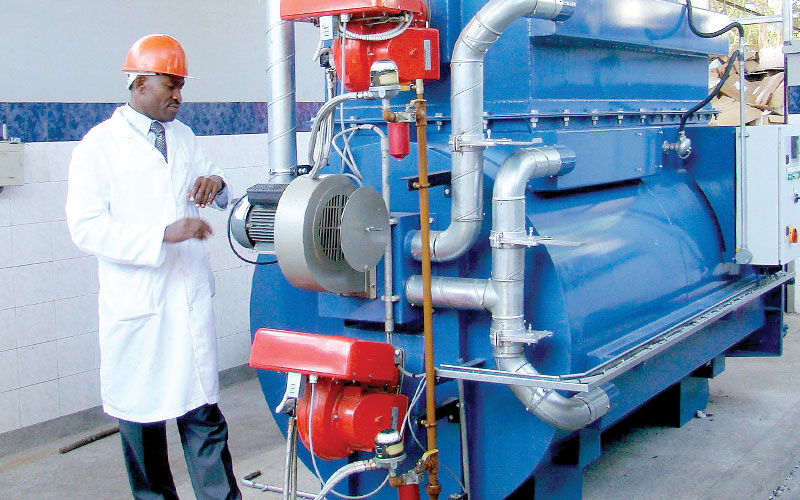
At Plenser, we don’t just supply vessels; we integrate advanced thermal solutions to ensure energy efficiency across your entire processing line. As market data shows, the demand for package boilers in Kenya’s food processing sector is growing precisely because manufacturers recognize that steam is the lifeblood of production.
The Critical Role of Industrial Boilers in Food Processing
How important are boilers? Very.
Steam is the backbone of food manufacturing. It is used for pasteurization, sterilization, cleaning, cooking, evaporation and drying. An unreliable boiler system doesn’t just cause a hiccup—it can shut down your entire production line, leading to massive losses.
When selecting a boiler for food processing in Kenya, you must consider:
- Fuel Type: Biomass (wood, briquettes, agricultural waste) is cost-effective for larger plants. Diesel offers high performance, while electric boilers provide precise, clean steam for smaller, hygiene-critical applications.
- Steam Purity: Food processing requires “culinary steam” or clean, dry steam that won’t contaminate the product.
- Compliance: Systems must meet emission regulations set by NEMA.
Plenser’s engineering expertise in industrial boilers, heat exchangers and emission-compliant combustion systems ensures your plant operates smoothly, safely and within environmental standards.
Beyond Dairy: Food Processing Systems for Industrial Plants
While dairy is a flagship sector, the food processing industry in Kenya is diverse. Processors often search for “fruit juice processing lines,” “industrial cooking kettles,” or “grain drying systems.”
Plenser’s Food & Industrial Processing division supports a wide array of sectors:
- Fruit & Juice Processing: Pulping systems, pasteurization units and aseptic filling support.
- Edible Oil Processing: Heating systems for neutralization, filtration units and storage tanks.
- Grain & Cereal Processing: Steam-assisted conditioning for milling, drying systems and thermal control for extrusion.
- Industrial Cooking: Steam kettles and jacketed vessels for sauces, soups and confectioneries.
How Much Does It Cost to Set Up a Processing Plant in Kenya?
This is one of the highest-search queries and the answer is: It depends. The cost is determined by several factors:
- Capacity: A small-scale dairy handling 1,000–3,000 liters per day will cost significantly less than a medium-scale (10,000 L/day) or large-scale industrial plant.
- Automation: Fully automated CIP and PLC-controlled lines cost more upfront but save on labor and errors long-term.
- Local vs. Imported Content: Locally fabricated tanks and supports can reduce costs, but specialized items like homogenizers may need to be imported.
- Civil Works: Retrofitting an existing building costs less than a greenfield construction.
- Utilities & Energy: The design of the boiler house, electrical substation and water treatment plant.
The biggest mistake many investors make is underestimating engineering infrastructure. Cutting corners on thermal systems, waste management and environmental compliance often leads to expensive retrofits or shutdowns later. As seen with the Limuru Dairy Farmers Co-operative, securing investment for specific technologies (like a KES 145M UHT machine) requires a clear understanding of the total project cost, including engineering.
Why Environmental Compliance Matters
Modern food factories are under scrutiny not just for food safety, but for their environmental impact. Compliance with emission regulations, waste disposal standards and effluent treatment requirements is mandatory.
Plenser integrates:
- Smoke-free combustion systems to meet NEMA air quality standards.
- Efficient heat utilization to lower your carbon footprint and fuel bills.
- Industrial waste management solutions to handle effluent safely.
Why Choose Plenser Limited for Your Processing Needs?
With over 25 years of engineering experience, Plenser Limited brings a level of depth that machine resellers cannot match. We are not just suppliers; we are systems integrators.
- Proven Industrial Expertise: Decades of experience in industrial heat energy and steam systems mean we understand the physics behind the process.
- Integrated Approach: We connect the dots—from the boiler house (the heart) to the processing vessels (the organs) and the control systems (the brain).
- Compliance-Focused Design: Our designs are aligned with Kenyan and East African industrial regulations from day one.
- Scalability:We build systems that grow with you, avoiding the need for costly replacements when you expand.
- Local Technical Support: Engineering doesn’t end at installation. After-sales service, spare parts and maintenance are critical for uptime and we are here for the long haul.
The Future of Food Processing in East Africa
The future belongs to those who embrace value addition, export-ready quality, sustainable energy and automation. The days of selling raw commodities are fading. Investors, cooperatives and manufacturers who modernize their facilities now will lead tomorrow’s market.
Engineering is not just about machines.
It’s about building systems that power industries, protect public health and support economic growth.
Ready to Build or Modernize?
If your search query brought you here, chances are you’re ready to take the next step.
Whether you are:
- Starting a new dairy or food plant
- Upgrading an old boiler system to be more efficient
- Expanding into new product lines like UHT, yogurt, or juices
- Seeking energy-efficient thermal solutions
Plenser’s Dairy, Food & Industrial Processing Division is structured to deliver end-to-end engineering solutions tailored to East Africa’s dynamic market.
The real question isn’t whether the industry is growing. It is. The real question is: Are your processing systems ready for that growth? Contact Plenser Limited today. Let’s engineer your success.